
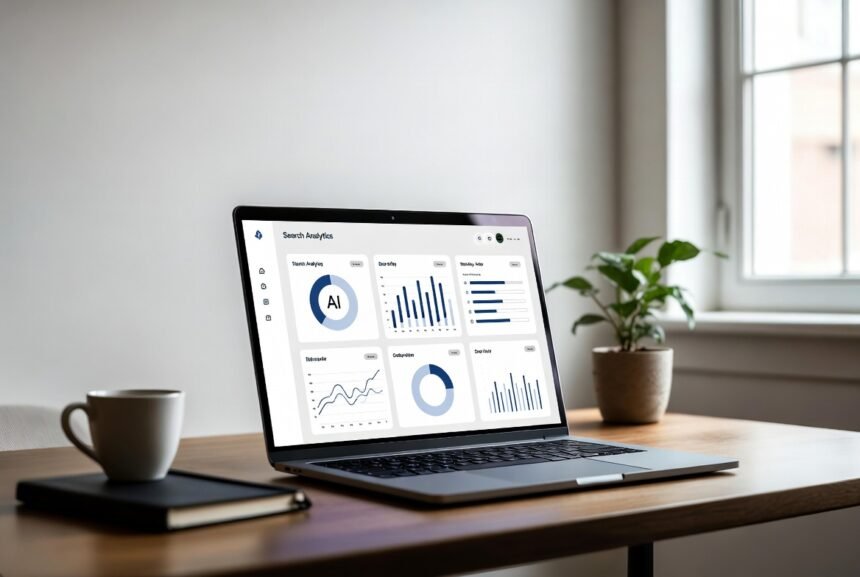
AI search monitoring tools track how brands, websites, and content appear in AI-generated answers from Google AI Overviews, ChatGPT, Perplexity, Gemini, and similar platforms. No single tool is the best fit for everyone — the right choice depends on your scale, budget, and which platforms matter most to your audience. This guide compares the leading options based on current feature sets and market position.
Key Takeaways
- Profound has emerged as the clear enterprise leader in 2026, reaching a reported $1 billion valuation with Fortune 500 clients — the strongest fit for large brands needing deep, multi-platform coverage.
- Otterly.ai and Peec AI are the go-to entry points for smaller teams and agencies, both starting around $29–90/month with fast setup.
- Ahrefs Brand Radar and the Semrush AI Visibility Toolkit make sense mainly for teams already inside those ecosystems, adding AI tracking to SEO data they’re already paying for.
- These tools complement, not replace, traditional rank tracking — AI-generated answers surface different sources than classic blue-link results, so both layers matter.
- No tool captures every AI assistant perfectly. Most teams pair a dedicated tracker with free signals like Google Search Console to validate what they’re seeing.
What AI Search Monitoring Tools Actually Do
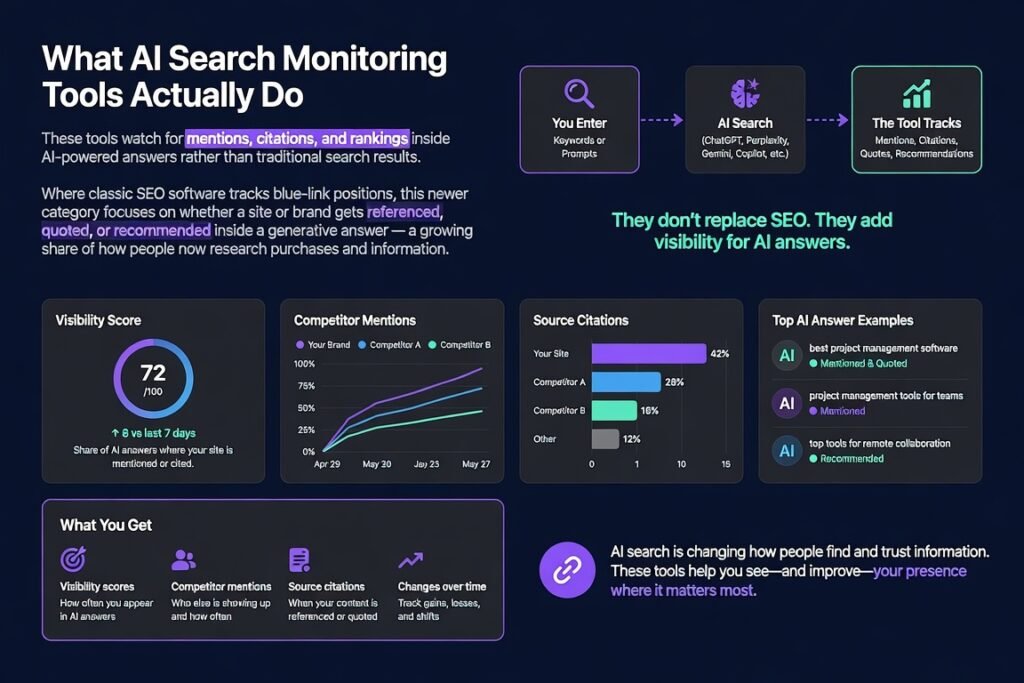
These tools watch for mentions, citations, and rankings inside AI-powered answers rather than traditional search results. Where classic SEO software tracks blue-link positions, this newer category focuses on whether a site or brand gets referenced, quoted, or recommended inside a generative answer — a growing share of how people now research purchases and information.
Most platforms let you enter target keywords or prompts, then report visibility scores, competitor mentions, source citations, and changes over time. They don’t replace standard SEO software; they add a layer of visibility for the growing share of searches where an AI summary, not a list of links, is what the user actually sees.
Leading Platforms Compared
- Profound — the current category leader, particularly for enterprise brands. It’s built around understanding how AI systems describe and narrate a brand, not just how often it appears, and covers the broadest range of AI surfaces (ChatGPT, Claude, Perplexity, Gemini, Grok, Copilot, Google AI Overviews and AI Mode, among others). Pricing runs at the enterprise level.
- Peec AI — one of the fastest-growing challengers in the space, popular with marketing teams that want daily, multi-platform tracking without enterprise complexity or pricing.
- Otterly.ai — widely considered the most accessible entry point, starting at roughly $29/month with a free trial, and strong on Google AI Overviews tracking specifically.
- Ahrefs Brand Radar — a natural add-on for teams already using Ahrefs, combining AI visibility with established SEO data and competitive benchmarking; offers a free basic tier with paid plans scaling up from there.
- Semrush AI Visibility Toolkit — similarly positioned as an add-on (roughly $99/month) for existing Semrush users who want AI tracking without adopting a new platform.
- Scrunch AI and ZipTie — both emphasize competitive analysis, AI crawler insights, and mention tracking, with Scrunch leaning toward enterprise governance features.
Matching a Tool to Your Situation
| User Type | Typical Goals | Recommended Focus | Suitable Tool Level |
|---|---|---|---|
| Individual content creator | Occasional brand checks, personal site visibility | Basic mention tracking on Google AI Overviews and ChatGPT | Entry-level or free-trial tools (Otterly.ai) |
| Small business owner | Local or niche keyword visibility, competitor awareness | Simple dashboards, citation alerts | Mid-tier tools with multi-platform coverage (Otterly.ai, Peec AI) |
| Marketing team (2–5 people) | Campaign tracking, share-of-voice reports | Competitor analysis, historical data, prompt research | Full-featured platforms with team access (Peec AI, Ahrefs Brand Radar) |
| Agency or multi-client manager | Client reporting, large prompt sets | Bulk tracking, exportable reports, API access | Advanced or enterprise options (Scrunch, ZipTie) |
| Enterprise brand team | Broad AI visibility across many engines | Comprehensive multi-platform monitoring, sentiment tracking | High-end specialized tools (Profound) |
Light users typically start with free trials or entry-level plans. Larger teams get more value from deeper historical data and collaboration features as their monitoring program matures.
How to Choose, Step by Step
- Identify which platforms matter most. Decide whether Google AI Overviews, ChatGPT, Perplexity, Gemini, or others drive the most traffic or brand interest for you — coverage varies by tool.
- Match features to your actual needs. Otterly.ai and Ahrefs Brand Radar emphasize strong Google AI Overviews tracking; Profound focuses on a comprehensive AI Visibility Score across many engines for larger brands; Scrunch and ZipTie lean toward competitive analysis and mention tracking.
- Test with a free trial or limited plan. Enter a small set of high-priority keywords or prompts and review the first reports for accuracy and clarity before committing.
- Evaluate reporting and alerts. Look for clear visibility scores, historical charts, side-by-side competitor views, and alerts (email or Slack) when rankings shift.
- Check integration and export options, especially if the data needs to feed into existing analytics or client reporting.
No single tool is perfect for every situation. Start narrow, measure real value against your goals, and expand only if the insights justify the added cost.
Practical Tips for Getting Real Value
- Start with 10–20 high-priority keywords or prompts rather than hundreds — focus produces clearer, more actionable insights.
- Cross-check results against manual searches in an incognito browser, since AI answers can vary by location and account.
- Pair AI search monitoring with traditional rank trackers rather than replacing one with the other.
- Set realistic expectations: AI answers shift frequently, so look for trends over weeks, not day-to-day swings.
- Review data weekly at first, then shift to monthly once patterns stabilize.
- Confirm current pricing and feature lists directly on each provider’s site — this market is moving fast, and plans change often.
Common Mistakes to Avoid
- Choosing the most expensive tool without testing first — many mid-tier options deliver enough data for smaller sites.
- Tracking too many prompts at once and drowning in noise instead of clear signal.
- Ignoring source citations. Knowing which pages an AI engine actually prefers to cite is often more useful than a single visibility score.
- Treating AI monitoring as a one-time setup rather than an ongoing practice — regular review catches both gains and sudden drops.
- Relying on the tool alone without improving content. Monitoring identifies the gap; better, more citable content is what closes it.
Conclusion
The best AI search monitoring tool is the one that matches your scale, target platforms, and budget — not necessarily the most feature-rich or expensive option available. Entry-level tools like Otterly.ai serve individual creators and small businesses well; Peec AI and Ahrefs Brand Radar suit growing marketing teams; and Profound currently leads for enterprise brands that need the deepest, broadest coverage. Test a short list against your actual goals, keep the setup simple, and remember that consistent monitoring paired with genuinely better content delivers the strongest results — the tool shows you the gap, but content is what closes it.
FAQ
What do AI search monitoring tools actually track?
Brand mentions, citations, and visibility inside AI-generated answers from platforms like Google AI Overviews, ChatGPT, Perplexity, and Gemini.
Is there one best AI search monitoring tool for everyone?
No. The right choice depends on which platforms matter most to your audience, how many keywords or prompts you need to track, and your budget.
Do these tools replace traditional SEO rank trackers?
No. They complement traditional tools by covering generative AI results that standard rank trackers typically don’t capture.
How much do AI search monitoring tools cost?
Pricing varies widely — entry-level tools like Otterly.ai start around $29/month, while enterprise platforms like Profound run into custom, higher-tier pricing. Always confirm current numbers directly with each provider, since this market moves fast.
Can a small website benefit from these tools?
Yes. Even small sites gain value from watching a focused set of important prompts and adjusting content based on what they find — you don’t need an enterprise budget to start.