
PVB (polyvinyl butyral) filament is designed to soften and smooth when exposed to isopropyl alcohol (IPA), letting you remove 3D-print layer lines without sanding. Use 91% or 99% IPA for the best results — 70% works but is noticeably slower and can leave a cloudy residue. The three main methods are direct spray/brush (fastest, ~10–30 minutes), a short immersion bath (a few minutes, with close monitoring), and vapor smoothing in a sealed container (1–4 hours, most even finish). Always work in a well-ventilated space with gloves, and let parts cure fully before handling.
PVB filament is popular among 3D printing hobbyists and makers because its layer lines can be removed easily with isopropyl alcohol. This guide covers the practical methods that work, the safety steps that matter, and the mistakes that most often ruin a print.
Key Takeaways
- PVB is specifically formulated to react with isopropyl alcohol — this is a well-documented, intentional property of the material (popularized by filaments like Polymaker PolySmooth), not a workaround
- 91–99% IPA gives faster, more predictable results than 70% rubbing alcohol
- Immersion baths typically run several minutes to reach a smooth finish, not just seconds — always test on a scrap piece first since exact timing varies by wall thickness and print settings
- Never pour used isopropyl alcohol down a drain; store and dispose of it properly, since it’s a flammable organic solvent
What PVB Filament Is and Why Isopropyl Alcohol Works
PVB is a 3D printing filament formulated to print with settings similar to PLA while remaining soluble in isopropyl alcohol. When the surface contacts IPA (commonly sold as 91% or 99% isopropyl alcohol), the outer layer softens and the layer lines merge. The result is a smooth, often shiny or semi-transparent finish without mechanical sanding.
This is a genuinely different mechanism from how other common filaments are finished: PLA generally resists alcohol smoothing entirely, PETG responds poorly, and ABS is typically smoothed with acetone instead. Matching the solvent to the filament matters — isopropyl alcohol on PVB is a deliberate, well-established pairing, not an improvised technique.
Three main techniques exist:
- Direct application (spray or brush)
- Short immersion bath
- Vapor smoothing in a sealed container
Higher-purity isopropyl alcohol (91% or preferably 99%) produces faster and more consistent results than 70% solutions. Always work in a well-ventilated area and wear nitrile gloves. Pricing for filament and alcohol varies by brand and retailer — check current product details before purchasing.
Real-World Scenarios: Different User Needs
The best method depends on part size, desired finish, and available workspace.
| User Type | Typical Parts | Preferred Method | Time Required | Notes |
|---|---|---|---|---|
| Light users (occasional hobby prints) | Small decorative items, miniatures | Spray bottle or brush | 10–30 minutes | Simple, low equipment |
| Medium users (regular makers) | Vases, lampshades, functional prototypes | Immersion + light wipe | 15–45 minutes | Balanced control and speed |
| Heavy / production users | Multiple or large aesthetic parts | Vapor chamber | 35 minutes–several hours | Most uniform finish, scalable |
| Transparency-focused users | Clear or translucent models | Controlled spray or vapor | 20–60 minutes + drying | Multiple light coats often needed |
Light users can achieve good results with a spray bottle and paper towels. Larger or high-detail parts benefit from vapor methods that treat all surfaces evenly.
Step-by-Step Methods to Smooth PVB with Isopropyl Alcohol
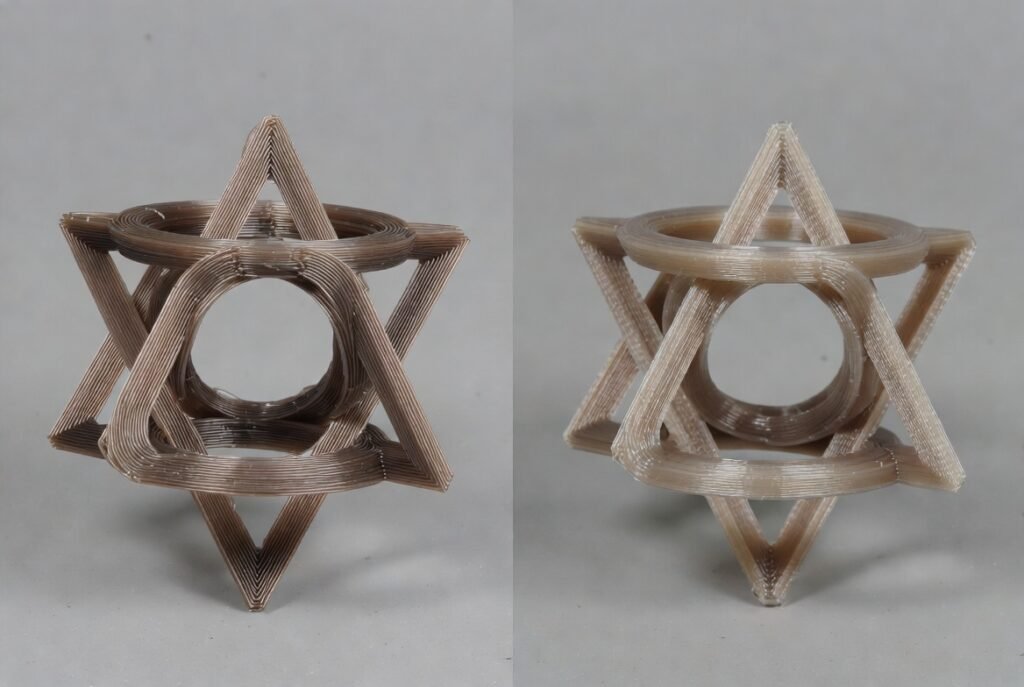
Safety first
Work outdoors or under a fume hood if possible. Wear gloves and eye protection. Keep isopropyl alcohol away from open flames — it’s flammable. Allow parts to dry fully before handling, and never pour used IPA down a drain; let it evaporate in a safe container or dispose of it as you would other flammable solvents.
Method 1: Direct Spray or Brush Application (fastest for most users)
- Print and cool the part completely. Remove supports and clean loose filament.
- Place the part on a disposable surface.
- Fill a clean spray bottle with 91% or 99% isopropyl alcohol.
- Lightly mist the surface from 6–8 inches away, or apply with a soft brush perpendicular to the layer lines.
- Wait 30–60 seconds for the surface to soften. Gently wipe excess with a lint-free cloth if needed.
- Allow the part to dry 15–30 minutes. Repeat 1–3 times for deeper smoothing.
- Let the part cure fully (several hours to overnight) until no longer tacky.
Method 2: Short Immersion Bath
- Pour enough high-purity isopropyl alcohol into a glass or chemical-resistant container to cover the part.
- Dip the print, checking progress every couple of minutes rather than relying on a single fixed time — full immersion smoothing commonly takes several minutes to reach a good finish, though thin-walled or highly detailed parts can soften much faster, so test on a scrap piece first.
- Remove, shake off excess, and place on a drying rack.
- Monitor closely — over-soaking can round fine details, cause sagging, or make the surface temporarily soft and slightly tacky to the touch.
- Dry thoroughly in open air.
Method 3: Vapor Smoothing (most uniform results)
- Choose a sealed container large enough for the part (plastic tub with tight lid or glass jar).
- Place paper towels or cotton balls soaked in isopropyl alcohol in the bottom or on the sides — don’t let them touch the print.
- Suspend or place the print so vapors can circulate freely.
- Seal the container. Check every 30–60 minutes. Smoothing typically takes roughly 35 minutes to a few hours depending on temperature, alcohol strength, and part geometry.
- Remove the part and air-dry completely, generally for at least two hours before handling.
Many users combine a light spray after vapor treatment for final gloss. Experiment on test prints first, since results vary with print settings, wall thickness, and exact filament formulation.
Practical Tips & Common Mistakes
Tips that deliver consistent results:
- Use 91% or 99% isopropyl alcohol — lower concentrations slow the process and leave more residue
- Print with slightly higher flow or thicker walls if you plan aggressive smoothing, since surface material will be partially dissolved
- Work in a warm environment (room temperature or slightly above) to speed vapor action
- For transparent parts, apply multiple light coats rather than one heavy dose
- Store smoothed parts away from moisture until fully cured
- Test small sections or sacrificial prints before treating finished models
Common mistakes that ruin prints:
- Using 70% isopropyl alcohol and expecting fast results — it works slowly and can leave a cloudy film
- Allowing liquid alcohol to pool in crevices, which softens details unevenly
- Leaving parts in a vapor chamber too long, causing loss of sharp edges or dimensional accuracy
- Handling the print while still tacky, transferring fingerprints or dust
- Skipping ventilation and working in a closed room — isopropyl alcohol vapors are strong and flammable
- Assuming every PVB brand behaves identically — some formulations respond faster than others
- Pouring used IPA down a drain instead of disposing of it properly
When these points are observed, the process becomes reliable and repeatable.
Conclusion
PVB filament offers an accessible way to achieve smooth, professional-looking 3D prints using ordinary isopropyl alcohol. Whether you prefer a quick spray, a monitored dip, or controlled vapor treatment, the core principle stays the same: controlled surface dissolution followed by thorough drying. Light users can start with a spray bottle; more demanding applications benefit from vapor chambers for even results. Always prioritize ventilation, high-purity alcohol, proper disposal, and test pieces. Check the specific recommendations from your filament manufacturer, since formulations and optimal techniques can differ slightly. With careful application, layer lines disappear and the print gains a polished, often translucent finish suitable for display or functional aesthetic parts.
FAQs
What strength of isopropyl alcohol works best for PVB?
91% or 99% isopropyl alcohol produces the most reliable and fastest results. 70% solutions work more slowly and may leave residue.
How long should I leave a part in a vapor chamber?
Start checking after 30–60 minutes. Many parts reach a good finish within about 35 minutes to a few hours, depending on part size and alcohol strength. Remove as soon as the desired smoothness is reached to preserve detail.
How long should an immersion bath take?
Longer than you might expect — often several minutes rather than seconds, though this varies by wall thickness and part detail. Check progress frequently rather than committing to one fixed time, and always test on a scrap piece first.
Can I smooth PVB prints that contain supports or complex geometry? Yes, but vapor methods treat all exposed surfaces more evenly than brushing. Remove supports first and monitor thin features closely.
Will smoothed PVB parts remain strong?
The bulk strength is largely retained, but the surface is slightly altered. Allow full curing time before applying mechanical stress. Some users note a temporary tackiness that disappears after thorough drying.
Is vapor smoothing safer than acetone methods used for ABS?
Isopropyl alcohol is generally considered less aggressive than acetone, but proper ventilation, gloves, and fire safety still apply. Never use near open flames.
Leave a Reply